
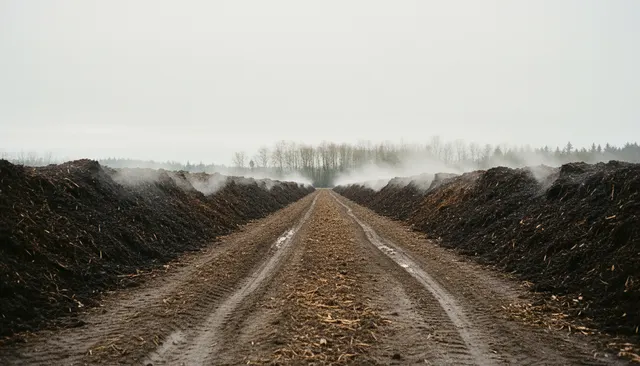
Waste is just an input in the wrong place.
A pressing operation produces a lot of wet pomace, and hauling it away costs money. Composting it costs less, and what comes out the other side sells. That's the whole idea. It isn't new either; it just isn't being run at scale anywhere in this valley.
Six stages, and none of them optional.
The ring is the whole business on one page. Every stage produces the input to the next, and the last one produces the first. A failure anywhere shows up everywhere, and the residence times below are the real constraint on how fast this can scale.
Twelve months, six stages.
Compost is a slow product. Here is where the time actually goes.
- 01
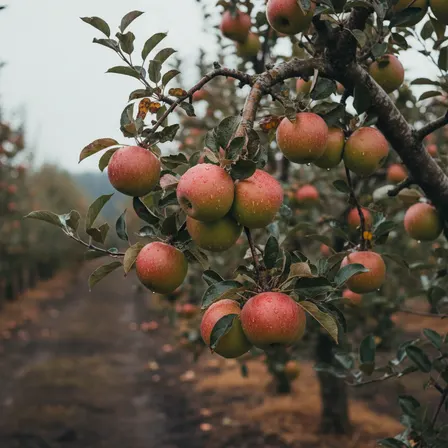
Harvest
Aug–NovFruit comes off the trees. Culls, drops, and undersized fruit that no packer will take get set aside instead of dumped.
- 02
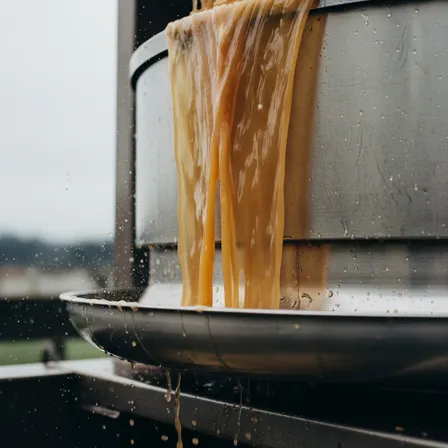
Press
Same weekApples and pears go through the press. Juice goes to the beverage side of the business. What is left is pomace: skins, seeds, and pulp, still wet and still full of sugar.
- 03
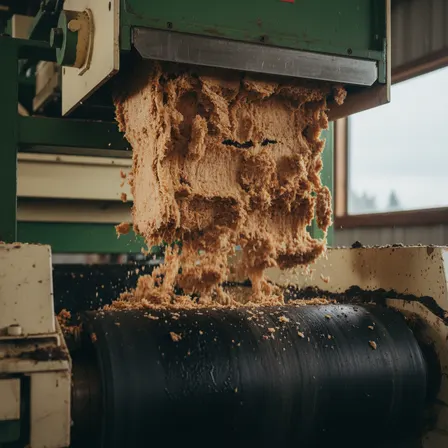
Build the pile
DaysWet pomace is too dense to compost on its own. It gets mixed with ground prunings for structure and poultry litter and horse manure for nitrogen, then laid out in windrows.
- 04
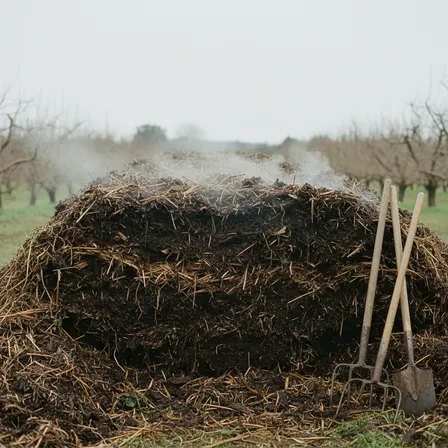
Turn
6–12 monthsThe rows heat, get turned on a schedule, and cool. Temperature and turn counts are logged, because a Class A compost claim has to be backed by records.
- 05
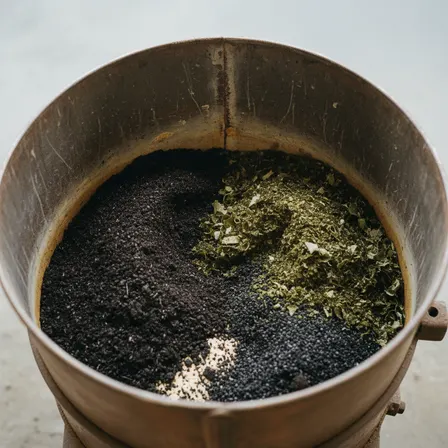
Screen and blend
WeeksFinished compost is screened. From there it splits: some stays bulk, some is bagged as soil, and some is blended with char, kelp, castings, or humic acid into a finished fertilizer.
- 06
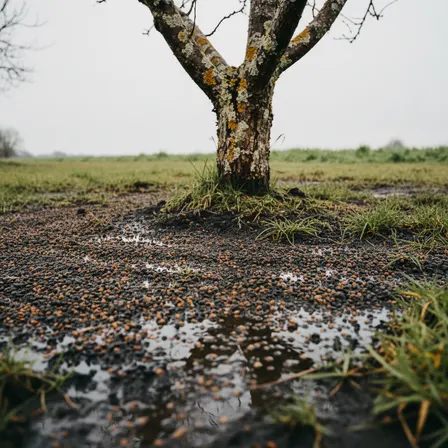
Back to the ground
OngoingProduct goes out to orchards, vineyards, garden centers, and our own rows. The trees it feeds grow the fruit that starts the cycle again.
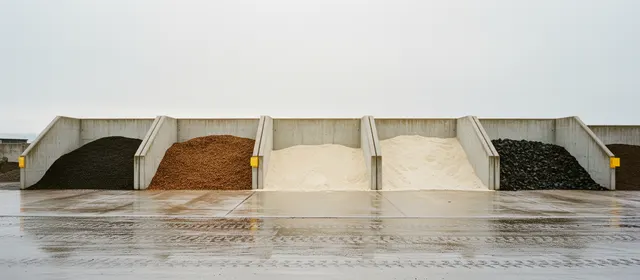
A yard the whole valley can use.
The orchard supplies the first inputs, but it won't supply all of them for long. Within a day's drive there are wineries with grape pomace, breweries with spent grain, poultry operations with litter, stables with manure, and mills with wood residuals. Most of it is a cost line on somebody's books.
The longer-term shape of this business is a regional yard that takes those materials in, composts them under one permit, and sends them back out as branded soil and fertilizer. That's a bigger build: permits, scales, a turner, a screen, a bagging line. It comes after the first product lines, not before them.
We're talking now with growers and haulers about feedstock supply. If you're paying to get organic material off your site, we'd like to hear from you.
Get in touch